AI Voiceover Services for YouTube Videos in 2026: What to Buy and When One Voice Hurts You
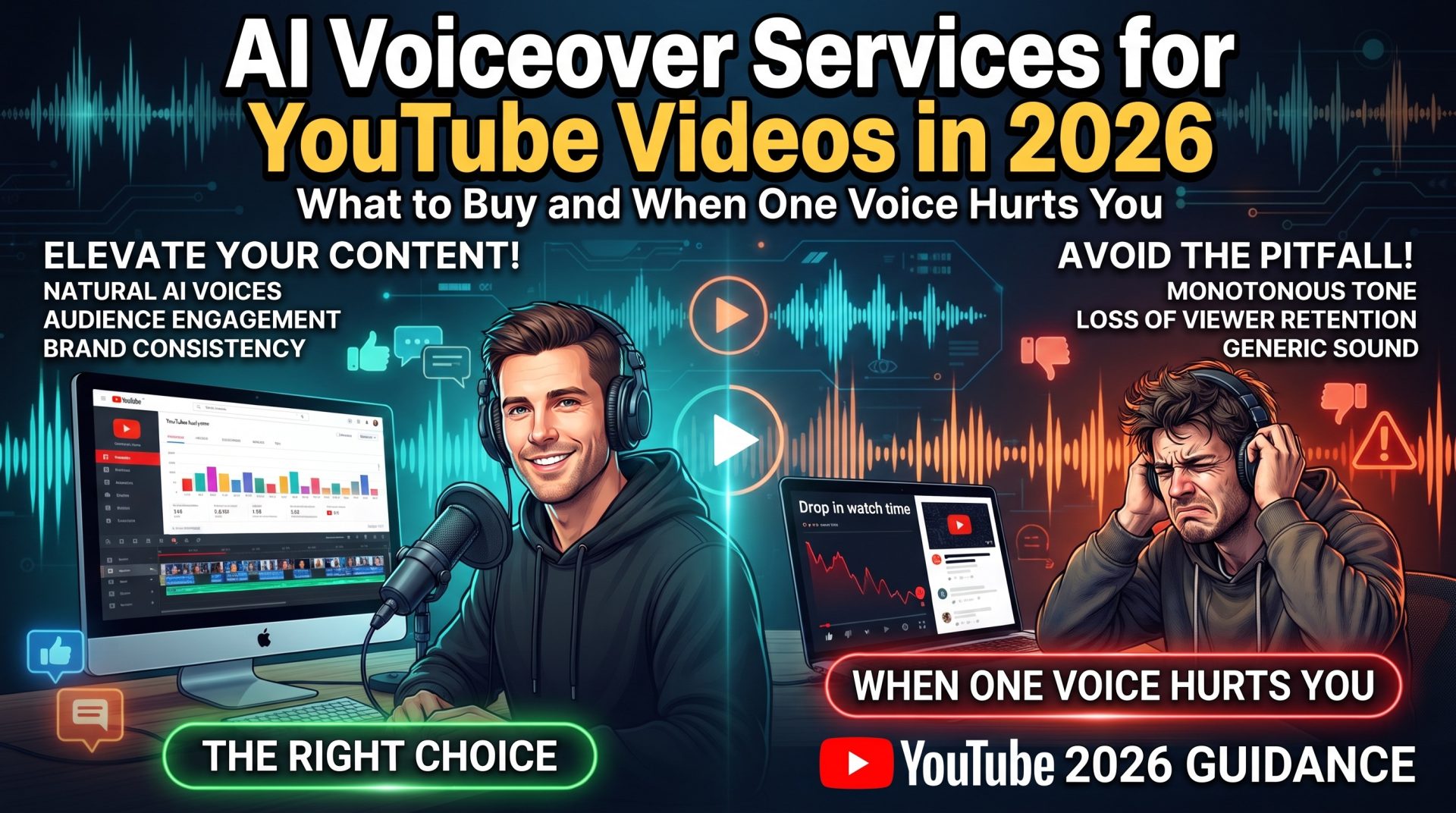
In 2026, a decent AI voice no longer sounds robotic; it sounds like a slightly tired presenter. That is wonderful for creators and dangerous for careless ones. The same technology that lets a channel publish daily videos without ever hiring a narrator can also flatten a brand into an anonymous, monotone wall — and audiences, who now recognise synthetic narration instantly, punish it with early exits. The question is not "is AI voiceover good or bad" but "which voice, for which video, bought how". This guide covers where AI voiceover genuinely helps YouTube channels, what the services cost and how to license them, and how to keep an audience from flipping away in the first ten seconds.
Where AI Voiceover Works — and Where It Fails
AI narration excels at consistent, high-volume formats: tutorials, listicles, documentary-style channels, daily news recaps and educational explainers where the script leads and the visuals follow. It fails where human texture is the product: emotional storytelling, comedy timing, testimonials and anything requiring genuine reaction. The smart channel treats AI as a tool of scale and keeps a human voice in reserve for the videos that must feel personal. Knowing which category your next video belongs to is the entire strategy.
Types of AI Voice Service in 2026
Consumer text-to-speech
Simple and cheap — paste text, choose a voice, generate an MP3. Fine for internal drafts and low-stakes content, but the generic quality shows quickly, and a familiar "default voice" can now actively embarrass a brand once viewers recognise it.
Premium voice platforms
A tier above: dozens of voice styles, adjustable pacing and emphasis, language switching and licensing included. This is the workhorse for serious faceless channels, offering naturalness at scale with per-use or subscription pricing that suits high upload volumes.
Voice clones and custom voices
You clone an actor's voice (with licensing) or build a custom synthetic brand voice. Expensive and worth it only for channels whose identity depends on a signature narrator — but when the clone is the brand, consistency becomes a genuine competitive advantage.
Hybrid: AI plus a human editor
Many of the best results come from an AI base track that a professional editor retimes, breathes and tones. For a video editing pipeline already producing daily content, this hybrid adds only a small cost per video and removes most of the "uncanny" quality that costs retention.
How Much It Costs
| Approach | Typical cost | Notes |
|---|---|---|
| Free/desktop TTS | $0 | Fine for drafting; quality limits clear |
| Subscription TTS platform | $20 – $100/month | Unlimited-ish, many voices |
| Premium studio voices | $50 – $300 per voice/month | Licensing included, commercial use |
| Custom clone + hybrid editing | $500 – $3,000 setup + per-video | Brand narrator as an asset |
Budget around what the voice is worth to retention. A channel whose audience stays 20% longer because of a warm, consistent narrator earns that cost back in watch time within a month.
Licensing and Public Trust
Commercial use changes the picture. Every credible platform requires you to check the licence for YouTube monetisation, and some voices (especially celebrity-derived or celebrity-sounding clones) carry serious legal risk. Beyond law lies trust: 2026 audiences value knowing whether they are listening to a person. Channels that edit an AI voice, credit it honestly and keep expectations aligned build more durable audiences than those trying to pass a clone off as human. Treat synthetic narration the way you would a stock photo — useful, but never the story itself.
Making AI Voices Sound Human
- Write for speech, not print: short sentences, spoken punctuation, contractions.
- Vary pacing per section instead of letting one tempo flatten the whole video.
- Add strategic pauses around the hook and the key point — empty space is where emphasis lives.
- Match the voice to the subject's personality; an energetic brand choosing a solemn narrator loses either way.
- Streamline the rest of the audio: the voiceover should float above music, not fight it in the mix.
Retention is won in the first ten seconds, and a poorly-paced AI intro loses it faster than any visual mistake. Invest in the hook line, the pause after it, and the first visual beat that pairs with it.
One Voice or a Voice System?
The modern winning pattern is a deliberate voice system: a primary narrator voice for the main series, a second for quick news shorts, and a human voice reserved for milestone or personal videos. Consistency within a series builds identity; variety across series keeps each one distinct. Channels that pick voices carefully as part of the brand — like choosing a colour palette — get more attention than those that tap "any voice" for each upload. The best AI voiceover strategy is invisible: you never think about the voice at all, you just keep watching.
Frequently Asked Questions
Will audiences in 2026 unify against AI voices?
Not against good ones used honestly — audiences reject flat, unvaried narration and deception, not the technology itself.
Can I use free TTS on a monetised channel?
Read the licence of that specific service. Free tiers often exclude commercial or monetised use, and YouTube's policies add their own disclosure expectations.
Should I blend AI with a human narrator?
For anything emotionally important, yes. The hybrid approach — AI for scale, human for signature moments — is how professional channels keep both pace and trust.
There is also a technical patience worth mentioning: audio quality outranks voice choice. A great AI voice buried under hiss, a music bed or compression will still lose viewers; a modest voice mixed cleanly, with consistent loudness and room around it, wins. Set loudness standards once — target around -14 LUFS for YouTube — and keep them across every video so the channel feels mastered. Mind the details too: read the platform's disclosure policies, keep your voice licences filed, and never let the narrator's personality drift between episodes, because consistency is the sound of a professional channel. When the audio is quietly excellent, the audience stops hearing the production and starts hearing the story — which is exactly what keeps them on the channel.
A voice is a brand asset in 2026, and AI simply makes many more voices affordable. Choose one deliberately, pace it like a narrator, and the technology disappears into the content.