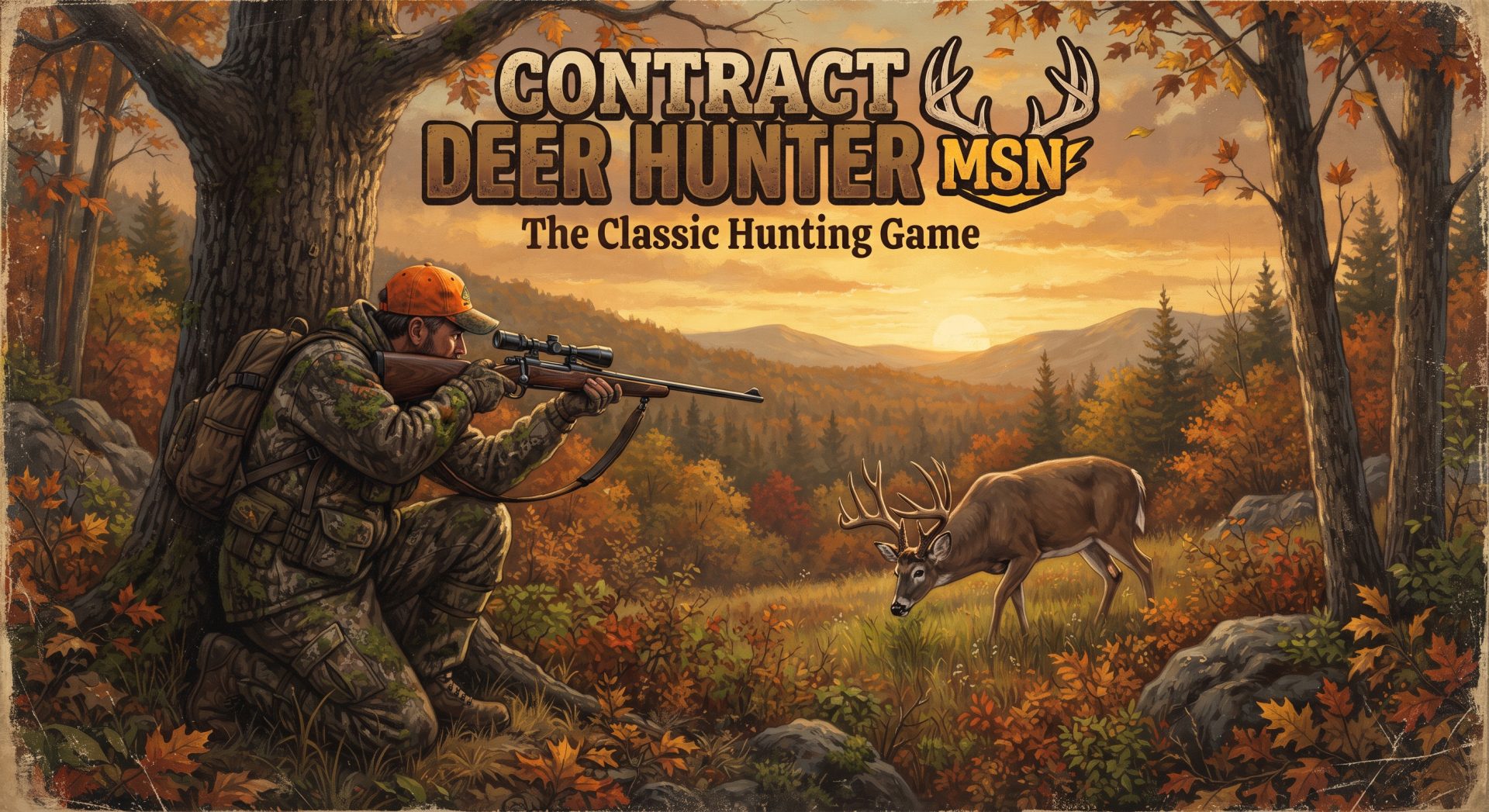
If you spent any time on browser game portals in the late 2000s, the name contract deer hunter msn probably brings back memories of narrow scopes, steady breath, and the patient art of the perfect shot. Built in the era when MSN Games streamed launch-and-play titles straight into the browser, this hunting simulation asked you to accept one assignment at a time, study the field, and place a bullet precisely where it mattered. Today it remains a cult favorite of the retro hunting scene, and this guide explains how the game works, how to aim properly, and how to convert those long tracking shots into a stack of completed contracts.
What Is Contract Deer Hunter MSN?
contract deer hunter msn is a browser-based hunting game that turns the act of harvesting a mature buck into a structured, paying assignment. Unlike arcade shooters that fill the screen with targets, this title rewards a slow and quiet approach: you select a contract, examine the map, and fire only when the shot falls within a clean and ethical range. The game lived on the MSN Games hub during its peak popularity, when millions of players opened their browser for a short burst of virtual hunting on a workday afternoon, and its reputation has outlived the portal because the gameplay itself earned real respect.
The core loop is deceptively simple. Every contract presents a target animal, typically a mature buck carrying a score value, and asks you to record a clean harvest before your ammunition runs out. What makes the experience memorable is the fidelity of the shot itself. Distance matters, breathing matters, and the posture of the animal matters. A careless trigger pull can wound a buck and send it sprinting, forcing you to track the animal across the map for a far more difficult follow-up shot. That mixture of patience, pressure, and reward is exactly why fans still load it up decades after its original release.
How the Contract System Works
Every session starts at the contract board. The board lists several hunts with rising difficulty, and each entry tells you what you are hunting, which location you will enter, and what payout you can collect. Early contracts might ask for a modest doe in open pasture, while the late assignments push toward trophy scoring, thicker timber, and stricter shot requirements. Choosing a contract is the first real decision, because the map, the weather, and the animal behavior all shift with each selection, and a sharp player reads those variables before spending a single bullet.
Once you accept the job, the hunt loads a fresh map and hands you a limited supply of ammunition. There is no restock crate and no regenerating health bar. You move slowly, drop into a crouch when you need concealment, and sweep the tree lines with binoculars before committing to a stalk. Longtime fans use the phrase "contract deer hunter msn" precisely to describe this structure: a hunt with a clear beginning, a middle, and an end, and a steady payout when you execute the entire chain cleanly.
Aiming in Contract Deer Hunter MSN
Working With the Scope
The kill shot in contract deer hunter msn depends far less on reflexes than on controlled discipline. When you shoulder the rifle, the scope fills the screen and the world slows to a crawl. Your crosshair wanders in a slow breathing pattern, and the secret is timing the trigger squeeze for the instant the reticle settles exactly where you intend the round to land. Holding your breath with the correct key tightens the sway dramatically, which becomes essential on long shots that stretch across an open field toward a deer you can barely see.
High, Heart, and Lung Shots
A clean shot through the lungs will drop a buck quickly, while a poorly placed hit can send the animal tearing into cover. The game models a rough vital zone, so your goal is to line the crosshair up on the chest just behind the front shoulder. When you connect, the deer reacts instantly and the contract records the result. When you clip a limb or shoot too far back, you will read the mistake in the animal's gait, and recovering from that error is precisely where your tracking instincts take over.
Tracking Shots and Reading Movement
Judging Distance by Eye
One of the most rewarding skills in this hunting sim is the moving shot, and a tracking shot is where contract deer hunter msn truly separates itself from static target games. Deer rarely hold still at the edge of a field, and the rifles in the game fire cartridges that take a moment to arrive. You must read the range, estimate the animal's pace, and place the reticle slightly in front of the chest rather than on the body itself. Leading a walking buck by roughly one body length is frequently the difference between a one-shot harvest and a long evening of following a fading trail.
Shooting From a Stand or Ridge
Some contracts drop you into a tree stand or onto a ridgeline, and that position changes every aspect of the shot. Shooting downhill exaggerates the distance because animals look smaller and farther away than they actually are. When you take a stand shot, spend an extra second confirming the hold before the deer reaches the tree line. A moving target shot from elevation is still a moving target shot: the animal's path matters far more than your height advantage, and experienced hunters treat high ground as a tactical tool rather than a license to rush.
Tips and Strategies for Better Hunts
- Use your binoculars first. Sweep the entire visible map edge before you move, because the buck you are paid to find is usually visible long before you close the distance.
- Control the breathing sway. The reticle drift is your biggest enemy past two hundred yards, so learn the hold-breath key and save it for the exact moment of the squeeze.
- Pick a clean shot lane. Position your approach so the deer offers a broadside or quartering-away angle instead of a head-on view of the chest.
- Never chase a moving animal. A tracking shot is a learned skill rather than a reflex; if a deer is trotting, wait for a stop or a slow walk and rebuild your aim calmly.
- Manage ammunition carefully. Most contracts do not hand out spare rounds, so every trigger pull should be aimed at the vital zone on the very first attempt.
- Memorize the landmarks. Spend the opening seconds scanning through the scope so you can reacquire the target quickly if your first shot misses and the deer bounds away.
All of these habits reduce to a single idea: treat every session of contract deer hunter msn like a genuine field exercise. The game will never punish a slow and deliberate approach, but it will punish recklessness without hesitation, and that honesty is a large part of why the old title still feels fresh and modern in spirit.
Why Players Still Return to This Hunt
Nostalgia alone cannot explain the staying power of this classic. Players come back because every contract forms a complete little story with a beginning, a risk, and a reward. The blend of simple controls and surprisingly deep ballistics gives the title the same pull as an excellent puzzle game: after a handful of failed stalks, the moment you finally drop a three-hundred-yard shot feels genuinely earned. For fans of retro hunting titles, reopening contract deer hunter msn feels like stepping into a familiar forest where the rules, the thrill, and the trophy wall remain exactly as they remember them.
Frequently asked questions
Is contract deer hunter msn still playable today?
In a practical sense, yes. The original browser build from the MSN Games era is no longer hosted on its old portal, but the title survives in legacy game archives and enthusiast collections. Running it usually requires an older browser plugin or a compatibility launcher, so budget a little setup time before you can return to the stand.
What makes the aiming different from modern hunting games?
The aiming model in contract deer hunter msn is deliberately challenging. There is no bullet drop indicator and no aim assist; you must solve distance, breathing sway, and animal movement entirely on your own. Newer players often call this unforgiving, but that exact discipline is precisely what the game's loyal fans love most about it.
How do I recover when I wound a buck?
Do not sprint after it. In the original contract deer hunter msn, wounded deer usually follow predictable escape routes toward water or dense cover. Mark the general direction of the flight, slip to your next vantage point, and wait for the animal to slow before attempting a follow-up shot. Patience after a wound is almost always rewarded with a second chance.
What is the best weapon strategy?
Purchase the heaviest rifle you can afford before each hunt, because a larger cartridge produces cleaner kills and fewer tracking sessions. When a contract offers a choice between a quick-handling rifle and a heavier one, most veteran players choose the heavy cartridge and simply accept the recoil in return for a more decisive hit.
How long does a typical contract take?
A standard contract deer hunter msn hunt can be completed in fifteen to twenty minutes for an experienced player, but a cautious stalk across a large map can easily stretch past half an hour. Because most contracts place no real time limit on you, the only constraint is your own willingness to wait for a shot worth taking.