
How Much Does an E-Commerce Website Cost in Pakistan in 2026?
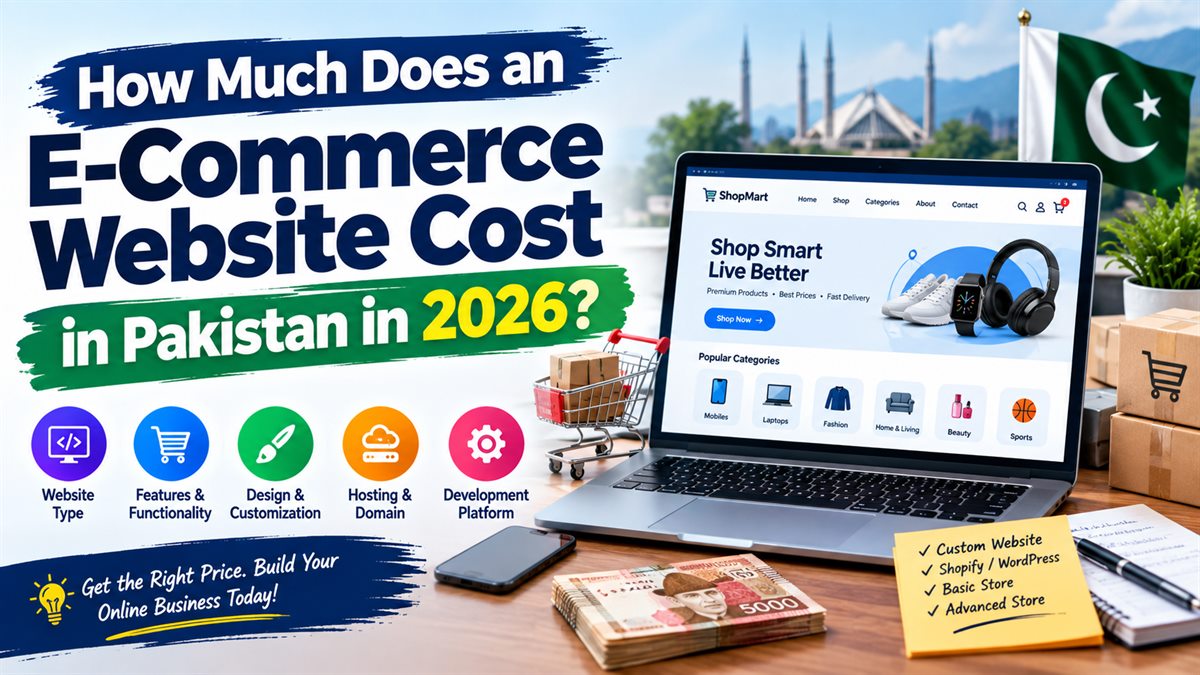
E-commerce in Pakistan is booming, and with the right setup a store can become a genuine, self-sustaining revenue channel. But the question every merchant asks first is the most confusing one: how much does an e-commerce website actually cost in Pakistan? Quotes for "online stores" span five figures to several million rupees, and the gap is rarely about greed — it is about scope. This guide lays out realistic 2026 price ranges by platform, what drives the cost, and the ongoing expenses that separate profitable stores from expensive hobbies.
E-Commerce Website Price Ranges in Pakistan (2026)
There are essentially three routes to a store. Each has different upfront costs and different monthly ceilings.
Route 1: WooCommerce (WordPress)
The most popular choice in Pakistan because of its flexibility and relatively low running costs. The platform itself is free; you pay for design, development and integrations.
- Starter store (template-based, 20–100 products): PKR 150,000 – 250,000
- Custom-designed store (bespoke design, advanced config): PKR 250,000 – 500,000
- Complex store (multi-vendor, bookings, ERP integrations): PKR 400,000 – 800,000+
Route 2: Shopify
Shopify sells a managed experience: hosting and security included, setup is fast and global-ready. Costs are therefore ongoing and in USD — roughly $29–$299 per month for the platform itself, with build fees on top.
- Standard setup: PKR 100,000 – 250,000 (design + theme + basic config)
- Custom theme + apps + payments: PKR 250,000 – 600,000
Route 3: Custom Development
For marketplaces, subscription businesses, or stores that must deeply integrate with logistics, accounting and supplier systems, a fully custom-built platform makes sense. Pricing typically starts at PKR 600,000 and scales with architecture complexity.
Whichever platform you choose, the strategic picture matters more than the headline. A professionally built store is an investment in trust — our e-commerce development service covers everything from store strategy and conversion-focused design through to payment and launch.
What Drives the Cost of an Online Store?
1. Platform and Licensing
Open-source WooCommerce is free but you manage your own hosting and updates. Shopify bundles hosting, security and updates into a monthly subscription. Custom builds are engineered from scratch for your specific rules — including who can sell, how commissions are calculated, and what the checkout flow must do.
2. Catalogue Size and Product Data
Importing 20 products is not the same as importing 2,000 with variants, weight tables, unique descriptions and optimised images. Product data setup is one of the most underestimated line items in any store budget.
3. Payment Gateways and Checkout Experience
In Pakistan this means much more than a payment button. You need local payment gateways (cards, bank transfer, wallets), cash-on-delivery handling, invoice generation, and a checkout flow tuned to actually convert — on mobile first, since most Pakistani shoppers buy on phones. Poor checkout UX will quietly burn a huge share of your potential sales.
4. Integrations and Automation
Order management, inventory syncing, courier APIs for real-time shipping rates, WhatsApp notifications, email flows and analytics — each integration adds build and testing time, but each also removes manual work that grows with every order.
5. UX and Conversion Design
The difference between a store that sells and a store that merely exists is design. Product pages structured for trust, clear shipping promises, easy search and filters, and a frictionless cart — this is where a UI/UX and app design skill set earns its keep. Visitors form their opinion in the first seconds; make sure it is a good one.
The Ongoing Costs Merchants Forget
Hosting That Keeps Up
Shared hosting is fine for landing pages, not for stores at scale. Expect PKR 15,000–60,000 per year for managed hosting appropriate to an online store — and always favour hosts with strong Pakistan-side or CDN performance.
Payment and COD Fees
Every order carries gateway or COD collection fees. Model them into your pricing from the start; with razor-thin margins, a 1–2% surprise on every order is painful.
Maintenance and Updates
Stores run on moving parts: plugins, themes, payment APIs and security patches. A monthly maintenance and care plan keeps the storefast, secure and online during sales peaks — when downtime is the most expensive thing your business can experience.
Fulfilment and Logistics
Courier partnerships, packaging and returns handling are the quiet backbone of e-commerce. Reliable fulfilment is often the difference between a repeatable business and a one-time campaign.
What Good E-Commerce Looks Like in Practice
The best way to scope your own project is to study a live example. Our Tijarat Markaz marketplace is a multi-vendor e-commerce build — a useful reference for what solid architecture, clean UX and dependable payment handling look like when they are planned properly rather than assembled hastily.
How to Budget for Your Store
- Start with scope: number of products, users, payment methods, integrations needed.
- Pick the platform for your reality: WooCommerce for flexibility, Shopify for speed to market, custom for scale.
- Add 20% buffer to the build quote for content, testing and launch fixes.
- Budget the operational cost: hosting, fees, maintenance, logistics — from month one.
- Plan the traffic plan: a store with no visitors converts nothing, so allocate budget to SEO and marketing before launch.
Frequently Asked Questions
Can I build an e-commerce website in Pakistan for under PKR 100,000?
You can launch a basic template-based store in that range, but you will pay in setup time, slower performance and limited conversions. For a real business, budget at least the low-to-mid five figures to get a store that sells.
Do I need a payment gateway before building?
No, but you should decide early. Gateway availability in Pakistan changes, and your developer must build the checkout around gateways that are actually approved and working for your business type at launch time.
WooCommerce or Shopify in Pakistan?
WooCommerce dominates locally because of lower recurring costs and flexibility with COD and local gateways. Shopify wins when you prioritise speed to market, global payments and predictable subscription pricing.
Final Thoughts
An e-commerce website in Pakistan is priced by scope, built on a platform, and paid for over its lifetime — not just at launch. Budget honestly for design, development, payments and growth, and your store becomes an asset. Under-budget the operational reality and even a perfect build will struggle.
Want a clear, honest proposal? Send us your product list, volume and growth goals and we will map the right platform to your budget — no inflated scope, no surprises.