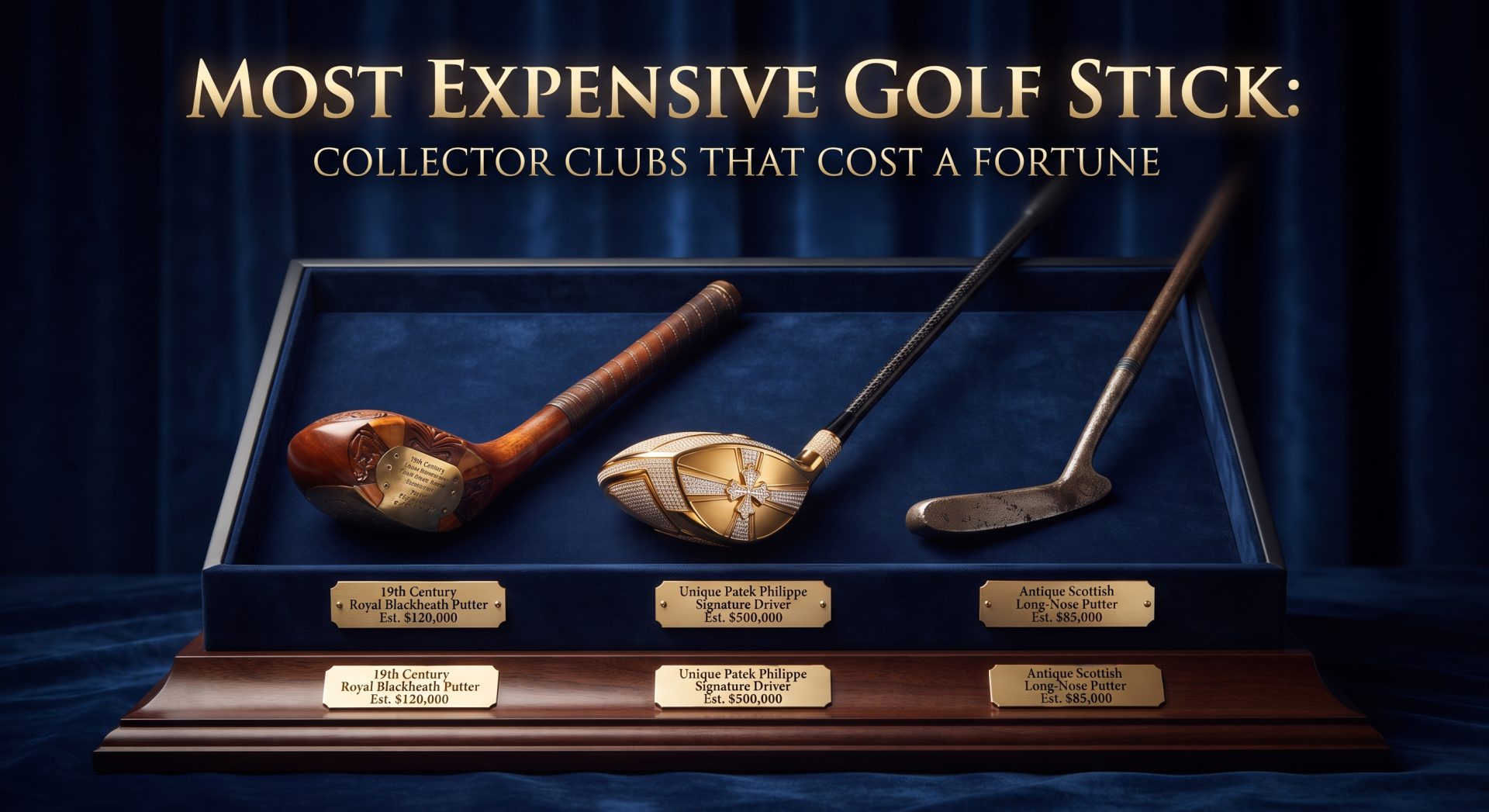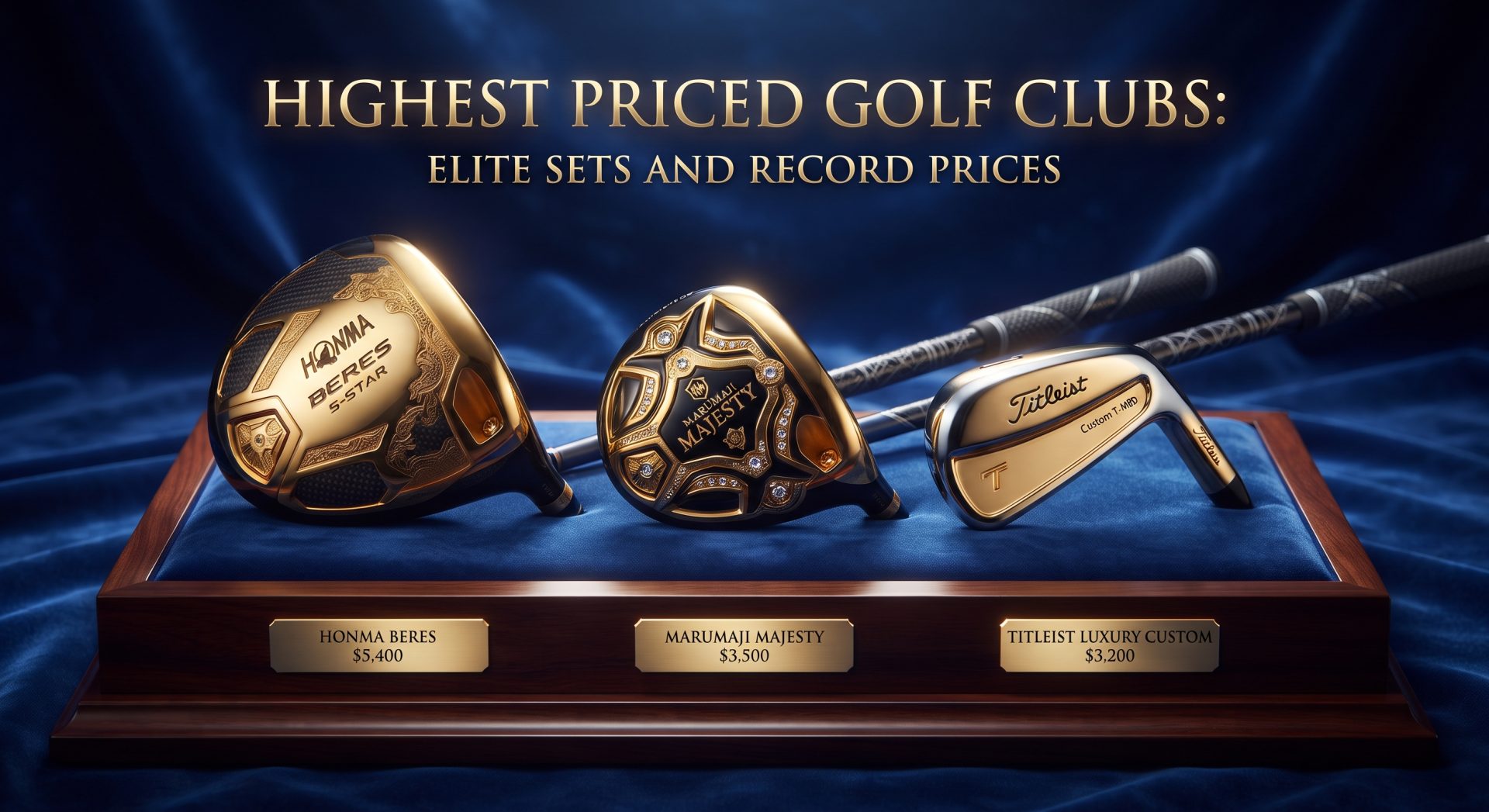
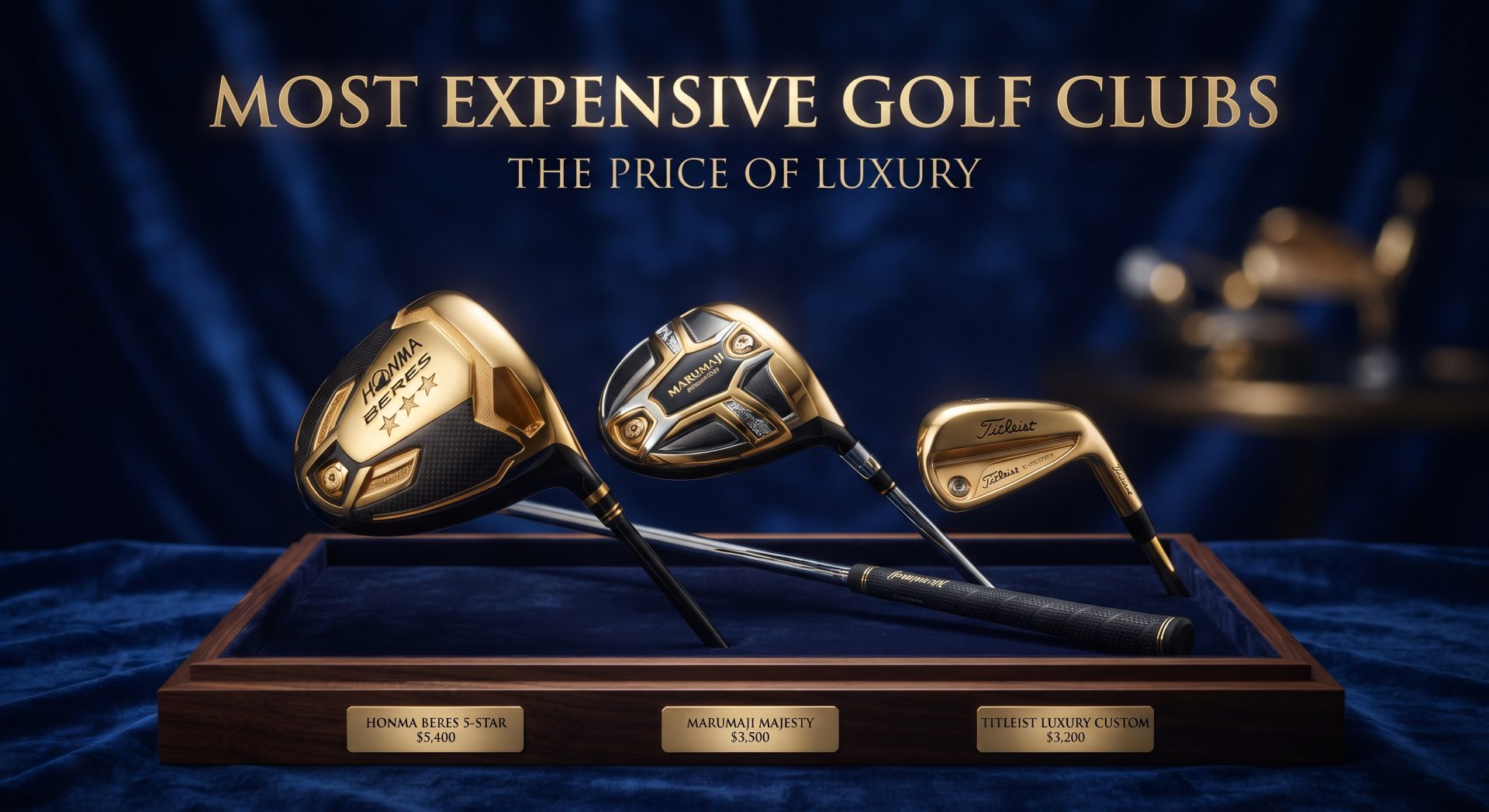
Step into the world of the most expensive golf clubs in the world, and you will find objects that blur the line between precision sports equipment and high-value jewelry. These clubs are not mass-produced off the rack; they are hand-forged, hand-finished, and often decorated with precious metals and stones that would not look out of place in a museum case. For the collectors and enthusiasts who chase the most expensive golf clubs on the market, price is rarely an obstacle and desire is rarely short-lived.
What Drives the Price of Premium Equipment
When a single driver retails for more than a compact car, it is fair to ask what is actually inside. The truth is that the most expensive golf clubs are built on a combination of rare materials, extreme labor, and brand scarcity that ordinary clubs never see. A standard iron set might be cast in a factory in a matter of hours. A luxury set can occupy skilled artisans for weeks of careful work, and the difference shows in every detail, from the soft feel at impact to the mirror finish on the sole.
The materials matter enormously. Soft Japanese steel alloys such as S20C are prized for their feel, but they are difficult to source and expensive to forge. Titanium faces, tungsten weighting, and gold inlays all push production costs upward. When a brand commits to using a solid block of 24-karat gold or a bag of certified diamonds in a single clubhead, the advertised price follows the material cost almost directly.
The Cost of Hand Craftsmanship
Hand forging is not a romantic marketing story; it is a genuinely expensive process. Every head is hammered, shaped, ground, and polished by specialists who may have decades of experience and a waiting list to match. That kind of labor does not scale, which is exactly why the most expensive golf clubs tend to be released in very limited runs or built to order for a single customer.
Luxury Drivers That Redefine the Ceiling
Drivers are the showpieces of any bag, and the most famous ultra-expensive models tend to be drivers. Gold-plated heads, diamond-studded crowns, and hand-engraved sole plates are recurring themes. One of the most famous examples in golf history is a gold-plated driver created as a celebration piece and offered at a five-figure price, with its face hand-milled and a sound tuned like a musical instrument.
Japan has a long tradition of luxury golf equipment, and its limited-edition drivers with gold face inserts routinely sell for tens of thousands of dollars. These clubs arrive in lacquered presentation boxes with certificates of authenticity, designed as much for display as for the tee box. Buyers often describe the unboxing as an event in itself, and that sense of occasion is part of what separates a collectible from an ordinary purchase.
Do Diamond-Studded Drivers Actually Work?
Everybody asks whether a diamond-encrusted driver still performs. The honest answer is that the stones are usually embedded in the crown or the sole plate, away from the face, so the clubhead keeps its structural integrity and its swing weight. The bigger challenge is psychological: swinging aggressively at a club worth more than a new SUV takes nerve. Many owners keep these collectibles in climate-controlled cases and game an ordinary backup instead.
High-End Forged Irons Are a Quieter Luxury
While drivers get the glitter, the most expensive golf clubs in the iron category are often quieter in their extravagance. A top-tier forged iron set can display no visible gold at all and still cost as much as a small vacation. What you are paying for is feel, precision, and hours of hand finishing per head. Japanese houses such as Honma and boutique British makers command serious money for their soft forged irons, and the wait lists can stretch for months.
Custom fitting pushes the total higher still. When a player orders a set with lie angles, shaft flexes, and grip sizes measured to the exact millimeter, the price climbs again. Add a hand-stamped name or logo to each hosel, and the set becomes truly one of one. Some of the most expensive golf clubs on record are personal commissions that will never be produced again, which is exactly what makes them so desirable.
The Enduring Power of Limited Runs
Scarcity is the engine that keeps resale values climbing. Manufacturers release numbered editions of fifty or a hundred sets, and buyers snap them up quickly. Because output is small, secondary-market prices often rise rather than fall. For a devoted golfer, owning one of those numbered sets is a status symbol that no embroidered logo can match, and for the brand it is a guarantee that the product line will never feel ordinary.
Who Actually Buys the most expensive golf clubs?
The buyer profile is wider than you might think. There are the obvious names: executives, celebrities, and professional athletes who can drop the price of a sports car on a set of irons without blinking. But there are also serious amateurs who treat equipment as an investment in enjoyment, and who spend months researching loft, lie, and sound before they hand over a single payment.
Collectors form the second major group. A four-figure putter or a five-figure driver bought today can be resold at auction tomorrow, so it works as both an asset and a toy. Golf memorabilia auctions regularly feature clubs tied to famous players and special editions, and the most expensive golf clubs ever made are often acquired by investors who may never swing them once.
Are Deep-Pocketed Purchases Actually Worth It?
If you measure worth purely in strokes per round, a five-thousand-dollar driver is rarely going to outperform a well-fitted five-hundred-dollar one for the average player. The swing is the same; only the feel is different. But if you measure worth in craftsmanship, exclusivity, and the simple pleasure of owning a beautiful object, the equation flips completely.
What is certain is that the luxury golf market is not shrinking. Brands keep releasing gilded drivers, diamond-inlaid putters, and hand-built iron sets, and the buyers keep lining up. The most expensive golf clubs are no longer a curiosity; they are a firmly established segment of the industry, with their own galleries, preservers, and auction calendar.
Commissioning your own club is often the decisive moment for a collector. You choose the metal, the engraving, the finish, and even the stones, and a small workshop turns those choices into something no retail catalog could hold. That personalization usually costs more than any stock model, but it guarantees that nobody else on the planet owns the same club.
Frequently asked questions
What is the single most expensive golf club ever sold?
Auction records vary, but the most expensive golf clubs ever to change hands, including diamond-encrusted drivers and museum-grade putters, have sold for sums in the hundreds of thousands of dollars. Many of those pieces never appear on any price list at all, because they were private commissions between a maker and a single buyer.
Why are Japanese forged irons so expensive?
Japanese makers use soft, high-quality steel, forge each head by hand, and apply meticulous finishes that other factories do not bother with. The work is specialist labor that takes many hours per head, production runs are tiny, and the resulting cost per set is naturally very high.
Do luxury clubs actually improve your game?
They can help at the margins if they are properly fitted, because forgiveness and feel genuinely matter. But for most players, the performance gap between a premium club and a very good mid-range one is much smaller than the price gap. The real value of a luxury set sits in craftsmanship, exclusivity, and the experience of ownership.
Can you insure the most expensive golf clubs?
Yes. Specialist insurers, and even some household policies, will cover golf clubs; but a genuinely valuable set needs an agreed-value policy with photographs, appraisals, and serial numbers. Traveling with such a set also demands careful packaging and, in many cases, customs documentation.
Where are ultra-expensive clubs actually sold?
Most are bought directly from the manufacturer, through a custom fitter, or from specialist boutiques in places like Tokyo, London, and Beverly Hills. Auction houses handle the rare pieces, and the secondary market for limited editions stays active all year long.